Training article
Training with heart rate
When to trust it, when to ignore it, and how to use it with power and perceived effort
Training to heart rate is a bit of a lost skill. Power meters did not make it useless. They just changed how we use it.
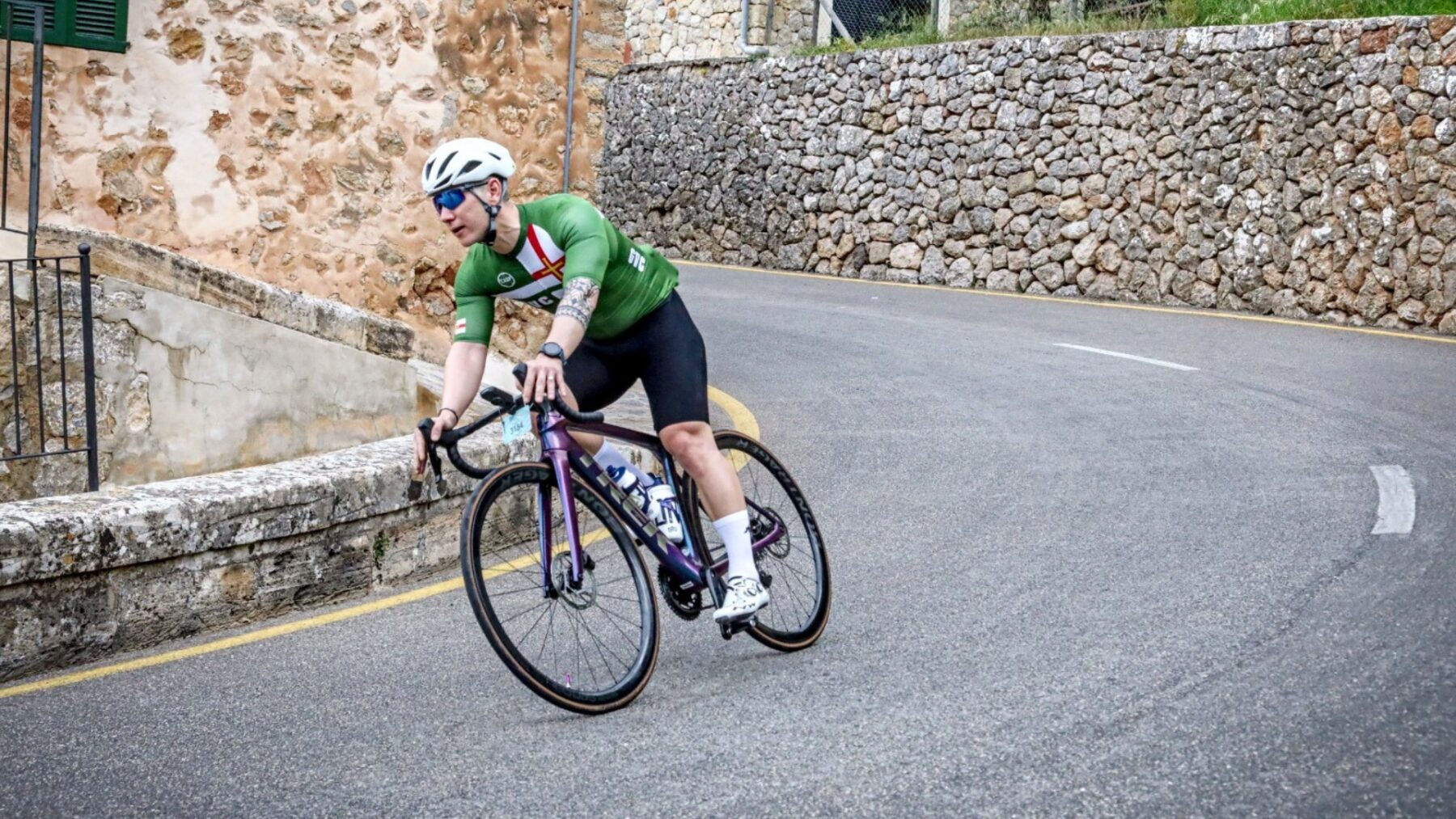
The downside of heart rate is the lag. Intensity changes, and the number on the screen takes a while to catch up. On a short effort that lag is the whole story and the interval is often finished before heart rate has levelled out at anything you can trust.
You also get the opposite problem on the way down. Heart rate spikes, then sits there. It does not fall as quickly as the effort did. So, you finish a rep, look down, and the number is still telling you about the work you have already done.
That is why I see heart rate as having quite a limited real-time use case in training. Anything under about five minutes is usually over before heart rate has become a useful target. The delay is not a fault in the tech; it's a physiological idiosyncrasy.
Power is considered more of a real-time metric, but it's not perfect. If we consider an all-out sprint for example, you cannot usefully stare at it, and less likely do anything about what you see. You are executing the effort, not managing a metric. Power as something you watch and adjust really comes into its own from about 60 seconds onwards.
Decoupling rate
Once the effort is long enough for the number to settle, however, heart rate becomes very useful. Particularly when you have a power meter as well.
For instance, a comparison I like is the decoupling rate. In a long ride where you hold a steady power, it is possible to see what your heart rate does in response. Early in a long ride the two should sit in a fairly stable relationship. Later, heart rate often climbs while power stays consistent. That rise — heart rate decoupling from power — is helpful information.
Over months, a smaller drift at the same sort of ride is one sign that fitness is moving the right way. In contrast, a drift that is bigger than usual for you could potentially signal fatigue or illness. Recent work on long rides has tied the same drift to something more specific than a vague sense of fading. As heart rate climbs against a steady power, the power you can still hold at an easy-to-steady endurance intensity tends to fall with it. The goalposts move during the ride. Heart rate is often the first thing that demonstrates this.
Do not read every rise as fitness, fatigue or illness, though. Heat, dehydration and a poor night's sleep can push heart rate up at the same power. So could a normal long effort in its own right. The rate of decoupling number (PWR:HR), therefore, is a prompt to look at the rest of the picture, not a diagnosis on its own.

Observing heart rate during intervals
If you do not have a power meter, heart rate is still super helpful. In fact, I would really encourage you to get comfortable using heart rate, power and perceived effort as interchangeable. When they agree, you can be confident. When they do not, that disagreement itself is useful information.
During 5-minute plus intervals, though, it is possible to use heart rate in a similar way to how you would use power and power training zones. Put simply, is your heart rate in the right range during the interval to stress the energy system you are looking to target with that interval. For this to work, of course, you need to know your heart rate zones and the ranges within which your heart rate must settle to be correctly hitting the right energy system. The starting point for this is gauging your threshold heart rate.
The field test I tend to use the most is a 30-minute time trial on a turbo, or an outside 10-mile time trial if you can persuade an athlete to sign up to a local race.
Ensure you use a heart rate strap rather than a wrist or arm strap. Optical heart rate monitors used by watches and wrist monitors are useful for tracking long-term patterns but, IMO, useless when you need accurate workout-based numbers. Heart rate straps are still the gold standard. On the date of writing this article, I completed a tempo run and during a 5-minute 5k-paced effort, there was a 20 bpm difference between the data from my chest strap and the optical heart rate monitor on my watch.
Warm up properly — at least 10 minutes, with some accelerations to get the fast-twitch muscle fibres going. Then ride 30 minutes as hard as you can genuinely sustain. We ignore the first 10 minutes and take the average heart rate across the final 20 minutes, minus 6 bpm, to give us a rough threshold heart rate.
A lab review of the 30-minute test, in cyclists and triathletes, found the last-20-minute heart rate repeatable, and also a little generous: on average it sat about six beats above a laboratory lactate threshold. Hence, we minus 6 bpm from the 20-minute average.
Warm up, then commit
At least 10 minutes, with some efforts. Build into the 30 minutes, as it's a long time at your max, and once within sight of the end, finish hard.
Ignore the first 10
We ignore the first 10 minutes, as your heart rate will still be climbing.
Average the last 20
We average the last 20 and minus 6 bpm. That average is your working threshold heart rate. Rough, repeatable, and good enough to build heart rate zones from.
Then get acquainted with it
Knowing the number is the start. The useful part is using threshold heart rate and heart rate zones alongside whatever else you have. Power, if you have it. Perceived effort, always.
For instance, my threshold heart rate usually sits around 156 bpm. If I am into the 160s, I know I am working my VO2max. If I then go above about 165, I know I am shifting into the anaerobic systems. It really is as simple as that. Your numbers will not be the same as mine, but the habit should be the same: know what "around threshold" feels like, know what "a few beats over" means, etc.
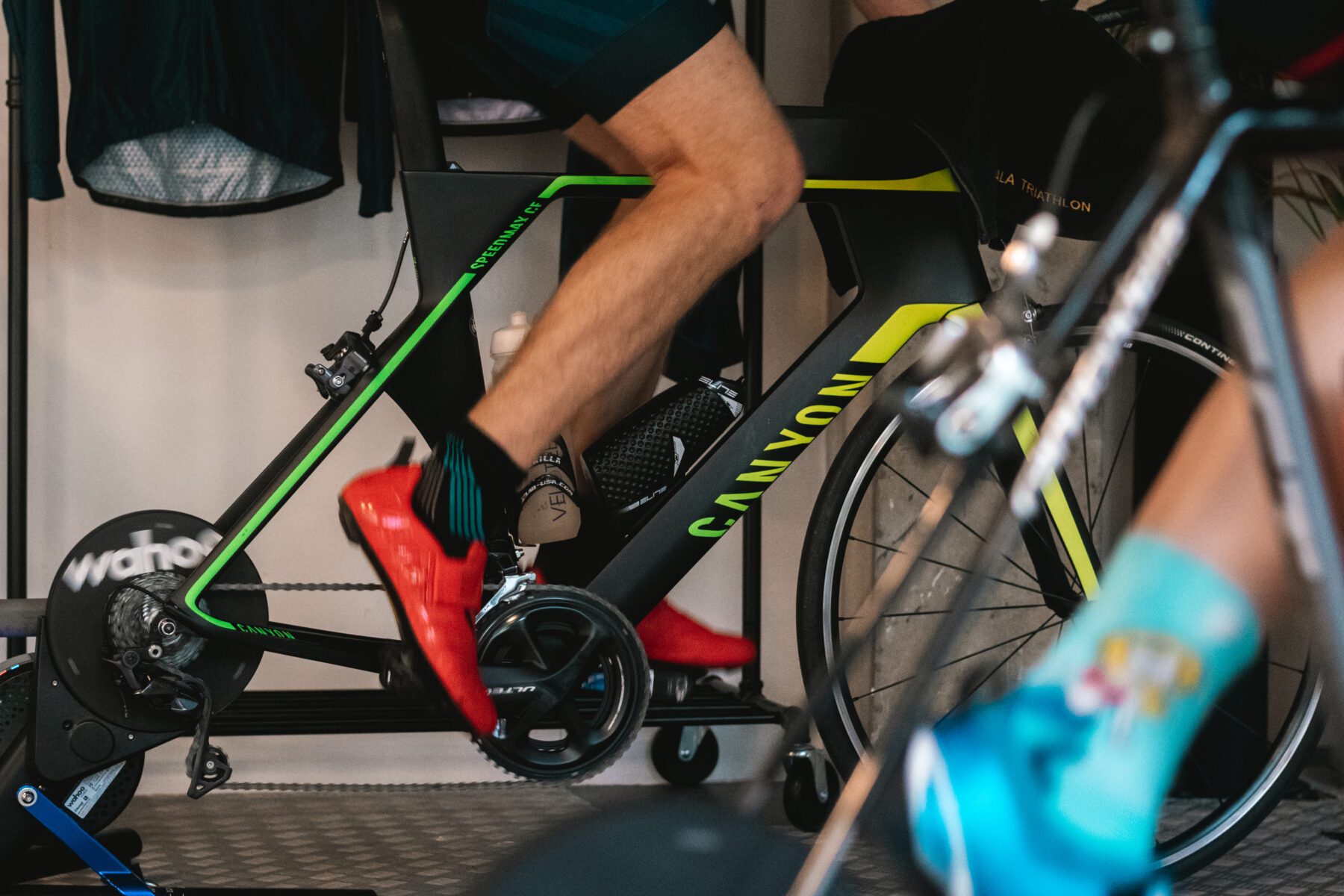
It is just as useful on race day
The same anchor works for long events. These are my numbers, against a threshold of around 156 bpm.
70.3, on the bike
~140
I want the lower end of zone 3. Hard enough to race. Not so hard that the run starts from a hole.
Ironman, on the bike
130s
Mid to high 130s. That is the middle to the top of zone 2 for me. There is a long run still to come.
There is an important practical point here for our triathletes. In training, hold the power and let heart rate tell you what the effort is becoming. In a long race, cap the heart rate and let the power come down. Defending a power number while heart rate climbs through the zones is how a good ride becomes a bad run.
Let it change the session
Heart rate should also be an important factor in deciding whether today's session should happen as written.
A common picture: the warm-up feels awful. The legs are heavy. Perceived effort is higher than it should be for the work in front of you. Then you look at heart rate. If it is much higher than normal for that effort or power, or much lower, something is up. The mismatch is the signal, not the direction of it.
If you have earned that fatigue — a big block, short sleep, sessions stacked up — scale the day down. Intensity, duration, or both. If you should not be that tired, because you have just had a recovery day or a run of easier sessions, it can be the first sign you are coming down with something. Heat, dehydration and a bad night can also influence the picture. The point is not to diagnose yourself from a warm-up, but the point is also not to force the session when heart rate and effort have both told you the day is different.
The key message
Heart rate is a poor real-time guide for short work, and a very good one once the effort is long enough to settle.
- Under about five minutes, do not chase heart rate. It has not caught up yet.
- Over about five minutes, watch it. Preferably from a chest strap, and alongside power and perceived effort.
- Get a threshold heart rate from a 30-minute effort, using the last 20 minutes minus 6 bpm, and judge the rest of your riding against that number.
- On long races, stay under threshold. Cap heart rate and let power fall, rather than the other way round.
- If the warm-up heart rate and the warm-up effort disagree with what you expected, consider scaling the session.
Want the number built into the plan?
Threshold heart rate, the zones around it, and the sessions where it should actually be the guide — that is part of the coaching, not a one-off test. Book a free consultation or email us.
More from the library and the squads: Training articles · Triathlon coaching · Cycling coaching · Running coaching · Hyrox coaching